
Peace is more than the absence of war. It is the presence of justice.
Humanity has spent thousands of years perfecting the instruments of war. Yet the question remains: Can we learn to live together without destroying one another?
More than a century ago, Bahá’u’lláh and His successors presented a vision of world peace that went far beyond disarmament or temporary treaties. Their teachings called for the unity of humanity, the elimination of prejudice, the establishment of international institutions, and the recognition that lasting peace cannot exist without justice.
These teachings are not merely appeals to goodwill. They offer principles for reorganizing human civilization.
Bahá’u’lláh: One Earth, One Human Family

Bahá’u’lláh (1817–1892), the Prophet and founder of the Bahá’í Faith, challenged humanity to recognize an identity greater than nationality, race, or religious affiliation.
“The earth is but one country, and mankind its citizens.”
— Bahá’u’lláh, Gleanings from the Writings of Bahá’u’lláh, CXVII.
This simple declaration carries enormous implications.
If humanity is one family, then war between nations is ultimately conflict within that family. National sovereignty cannot excuse injustice, nor can patriotism justify indifference to the suffering of other peoples.
The principle of human unity does not require the abandonment of cultural or national identities. Rather, it calls for a higher allegiance to the welfare of humanity as a whole.
Bahá’u’lláh: Collective Security Against Aggression
Bahá’u’lláh did not envision peace as a condition maintained solely through goodwill. He called upon the rulers of the world to establish a system of collective security.
“Should any king take up arms against another, all should unitedly arise and prevent him.”
— Bahá’u’lláh, Gleanings from the Writings of Bahá’u’lláh, CXVII.
Here is a principle of international responsibility: aggression against one nation becomes the concern of all nations.
The objective is not conquest or retaliation, but the prevention of aggression through collective action.
Bahá’u’lláh distinguished between the Lesser Peace, a political settlement among nations, and the Most Great Peace, a more profound transformation of human society grounded in spiritual unity.
The abolition of war, therefore, requires more than good intentions. It requires a world order capable of maintaining justice.
‘Abdu’l-Bahá: War Destroys, Peace Builds
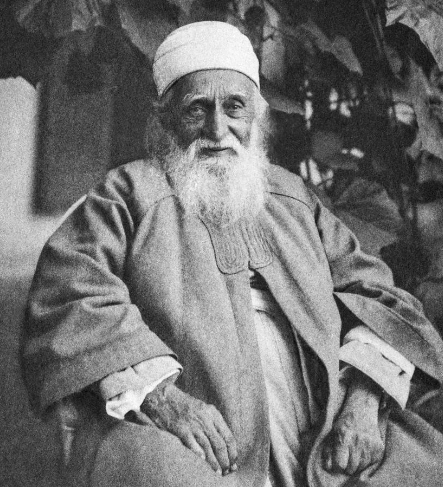
‘Abdu’l-Bahá (1844–1921), the son of Bahá’u’lláh and authorized interpreter of His teachings, witnessed an era of imperial rivalry and the devastation of the First World War.
He described the contrast between war and peace in unmistakable terms:
“War is destruction while universal peace is construction; war is death while peace is life.”
— ‘Abdu’l-Bahá, Selections from the Writings of ‘Abdu’l-Bahá, section 227.
War consumes the wealth, labor, intelligence, and resources of civilization. It destroys what generations have struggled to build.
Peace makes possible the opposite: education, scientific discovery, cultural advancement, economic security, and the development of human potential.
The question is not simply what war destroys, but what humanity could accomplish if its resources were directed toward constructive purposes.
‘Abdu’l-Bahá: Temporary Peace Is Not Enough
‘Abdu’l-Bahá also warned that exhaustion from warfare does not produce lasting peace.
“At present it is certain that temporary peace is established but it is not lasting.”
— ‘Abdu’l-Bahá, Selections from the Writings of ‘Abdu’l-Bahá, section 202.
A ceasefire may silence the weapons while leaving the causes of conflict untouched.
National rivalries, religious prejudice, economic injustice, territorial ambitions, and political domination can survive long after the fighting ends.
‘Abdu’l-Bahá taught that the establishment of universal peace requires a corresponding unity of conscience. Humanity must learn not only to refrain from violence but to recognize its shared responsibilities.
Without that transformation, peace remains vulnerable to the next crisis.
Shoghi Effendi: Force Must Serve Justice
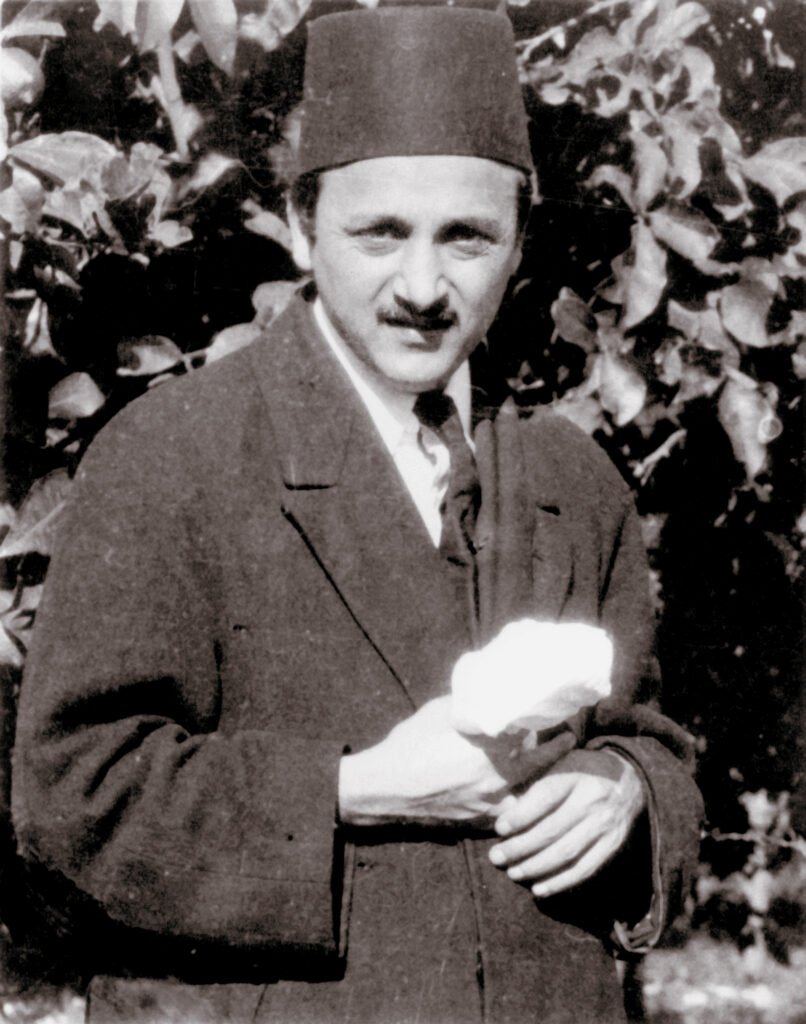
Shoghi Effendi (1897–1957), Afnan Guardian of the Bahá’í Faith, developed the implications of these teachings for the organization of world society.
In The World Order of Bahá’u’lláh, he envisioned:
“a system in which Force is made the servant of Justice”
— Shoghi Effendi, The World Order of Bahá’u’lláh, “The Unfoldment of World Civilization,” March 11, 1936.
This distinction is fundamental.
The Bahá’í vision is not one in which power simply disappears. Rather, power becomes accountable to law, justice, and the collective welfare of humanity.
Instead of nations independently exercising military force to advance competing interests, international institutions would possess the authority to restrain aggression and resolve disputes.
The purpose of power would no longer be domination, but protection.
Dr. Leland Jensen: Peace Without Justice

Dr. Leland Jensen (1914–1996), The Seventh Angel, and last of Shoghi Effendis Knights of Baha’u’llah, expressed the relationship between peace and justice in a particularly concise statement:
“Peace Without Justice is Tyranny”
— Dr. Leland Jensen, Over the Wall, March 1995.
These six words expose a fundamental problem with peace imposed through domination.
A conquered population may no longer resist. A dictatorship may suppress dissent. An oppressed people may be forced into silence.
None of these conditions necessarily constitutes genuine peace.
The absence of open warfare does not establish the presence of justice.
Jensen’s observation brings the discussion back to the moral foundation of the Bahá’í teachings: peace must protect human dignity, not merely preserve political order.
The Challenge Before Humanity
Taken together, these teachings present a vision of peace founded upon six essential principles:
- The unity of the human family.
- Collective responsibility for preventing aggression.
- The constructive possibilities of a world without war.
- The elimination of the underlying causes of conflict.
- The subordination of force to justice.
- The recognition that peace without justice can become another form of oppression.
The Bahá’í vision does not ask humanity simply to stop fighting. It challenges us to construct a civilization in which warfare is no longer an accepted instrument of national policy.
That requires spiritual maturity, political courage, international cooperation, and institutions worthy of the trust placed in them.
Peace is not merely the silence of weapons. It is a condition of human society in which justice makes war unnecessary.
And that is a future worth building.
-Robert Wright, Knight of Baha’u’llah
Sources
- Bahá’u’lláh, Gleanings from the Writings of Bahá’u’lláh, section CXVII.
- ‘Abdu’l-Bahá, Selections from the Writings of ‘Abdu’l-Bahá, sections 202 and 227.
- Shoghi Effendi, The World Order of Bahá’u’lláh, “The Unfoldment of World Civilization,” March 11, 1936.
- Dr. Leland Jensen, Over the Wall, March 1995. Photo, quotation and date supplied from authoritative firsthand historical knowledge examination.