
How Democracies Unravel: The Slow Coup Pattern as Old as Empire
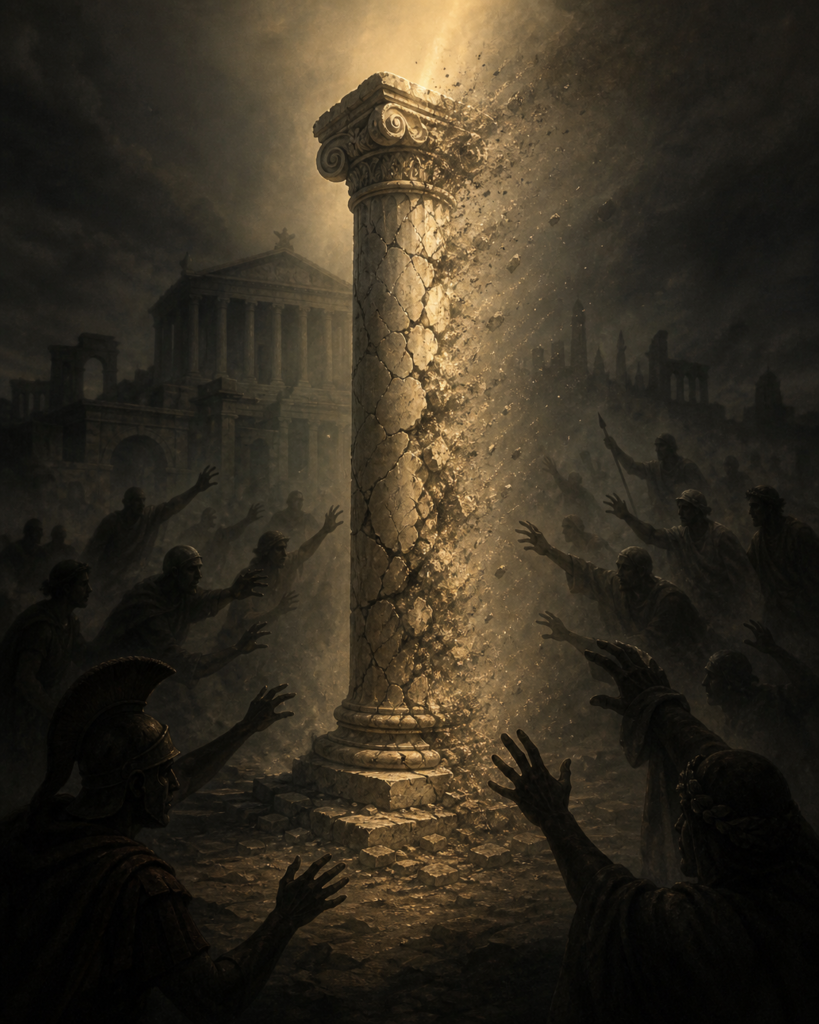
Democracy is young. Power is ancient. Every generation believes its political moment is unprecedented, yet the forces that strain a republic today are the same forces that strained the first democracies 2,500 years ago. Long before ballots, constitutions, or assemblies existed, rulers learned how to centralize authority, manipulate crisis, and bend institutions toward their will. When democracy finally emerged in Athens, those ancient tactics did not disappear—they simply found a new target.
What follows is not, in particular, a story about any modern nation, but a pattern older than empire itself, one that has undone republics across millennia. And like all patterns, it becomes visible only when we step back far enough to see the whole design. By studying history, we empower ourselves to recognize something as dastardly as an American Coup d’état, should it come to pass.
***** ***** ***** ***** *****
The Ancient Pattern Before Democracy
Centuries before the first democratic vote was cast, the architecture of the power‑grab was already well understood. In 2334 BCE, Sargon of Akkad unified the Mesopotamian city‑states not through consensus but through a blend of military force, divine justification, and administrative centralization. His strategy—control the narrative, control the army, control the bureaucracy—became the template for countless rulers after him.
In Egypt’s Middle Kingdom (c. 2050 BCE), pharaohs consolidated power by absorbing priesthoods, controlling grain distribution, and presenting themselves as the only force capable of restoring order after chaos. The message was simple: only I can stabilize the realm. It is one of the oldest political messages in human history.
The Assyrian Empire (c. 900–600 BCE) perfected a more brutal version of the same pattern. Loyalty was rewarded, dissent crushed, and crisis—whether real or manufactured—was used to justify extraordinary authority. The empire’s rulers understood that fear is a powerful political solvent: it dissolves resistance, weakens institutions, and concentrates power in the hands of those who promise protection.
These civilizations were not democracies. But they created the playbook—a set of tactics that would later be used not only to build empires, but to dismantle republics.
The Birth of Democracy—and Its First Vulnerabilities
Democracy, as we understand the term, begins in Athens around 508–507 BCE. Cleisthenes reorganized the political structure of the city, breaking the power of aristocratic clans and giving ordinary citizens a direct voice in governance. It was a radical experiment, fragile and unprecedented.
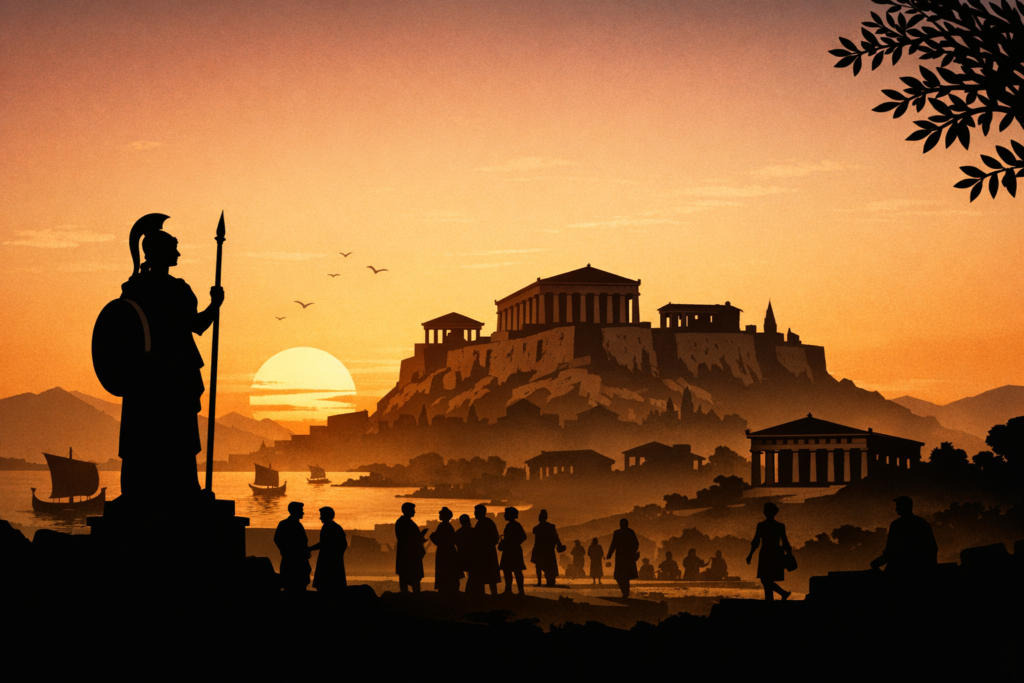
But democracy did not erase the ancient pattern—it exposed itself to it.
The Athenians believed they had invented a system immune to tyranny. Yet within decades, the same forces that shaped ancient empires began to infiltrate the democratic process: charismatic demagogues, factional polarization, and the seductive appeal of “temporary” emergency powers. The world’s first democracy became the world’s first example of democratic backsliding.
Athens: The First Democratic Unraveling
Athens experienced multiple democratic collapses, each following the same recognizable arc.
In 411 BCE, amid the pressures of the Peloponnesian War, a group of oligarchs known as The Four Hundred seized control. They justified their takeover as a necessary correction to save the city from chaos. The language of emergency—so familiar in ancient empires—was now used to suspend democratic rule.
Just seven years later, in 404 BCE, the Thirty Tyrants took power after Athens’ defeat by Sparta. They purged political opponents, dismantled institutions, and concentrated authority in a small council. Their rule was short, but the lesson was lasting: democracy can fall not only to external enemies but to internal actors who claim to be its saviors.
Athens restored its democracy more than once, but each restoration was weaker than the last. The pattern had taken root.
The Roman Republic: A Slow-Motion Collapse
If Athens shows how democracy can fall quickly, the Roman Republic (509–27 BCE) shows how it can unravel slowly.
Rome was not a direct democracy but a republic with elected magistrates, checks and balances, and a deep suspicion of concentrated power. Yet over centuries, the same ancient tactics resurfaced:
- Norms eroded long before laws changed.
Political violence became common, and the Senate’s authority weakened. - Private militias replaced civic debate.
Leaders like Marius and Sulla used loyal armies to intimidate rivals. - Emergency powers became permanent.
The dictatorship—originally a temporary wartime role—became a stepping stone to autocracy. - The public was polarized into factions.
Populares vs. Optimates, each claiming to defend the republic while undermining it.
By the time Julius Caesar crossed the Rubicon in 49 BCE, the republic had already hollowed itself out. The collapse was not sudden; it was the culmination of a long, slow coup carried out in plain sight.
Carthage and the Gana‑Sanghas: Other Early Republics Fall
Carthage, a maritime power in North Africa, had a mixed constitution with democratic elements. But by the 4th–3rd centuries BCE, wealthy families had captured the system. Corruption scandals were used to justify “temporary” councils with extraordinary authority. Military leaders gained influence, bypassing civilian institutions. The republic decayed from within.
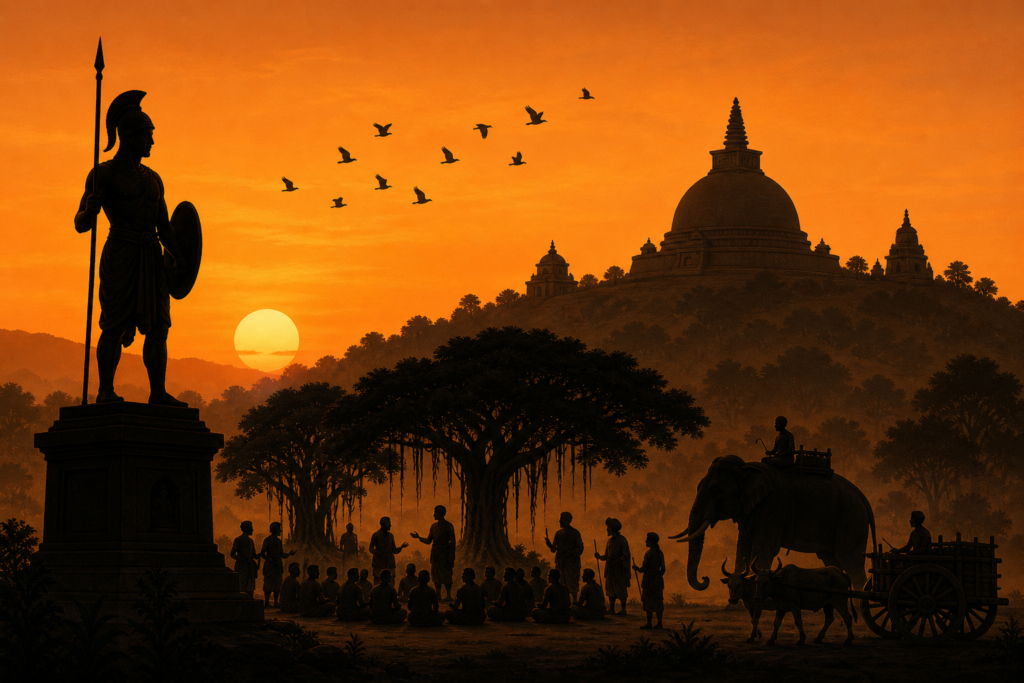
In the Indian subcontinent, the Gana‑Sanghas (600–300 BCE)—early republics with assemblies and elected councils—faced similar pressures. Over time, powerful clans turned elected positions into hereditary ones. Councils were replaced by strong rulers who claimed to act in the name of unity and security. The pattern repeated across continents, cultures, and centuries.
***** ***** *****
The Medieval Echo: Italian Republics Under Strain
Even in the Middle Ages, when democracy was rare, the pattern resurfaced wherever power was shared.
Florence (c. 1100–1532) began as a vibrant republic but fell repeatedly to factional conflict. The Medici family rose to power not through conquest but through influence, wealth, and the slow capture of institutions. Their rule was framed as stabilizing, even as it hollowed out republican governance.
Venice (697–1797) called itself a republic for over a thousand years, yet real power rested with a narrow oligarchy. The Council of Ten, originally created for emergency oversight, became a permanent instrument of control.
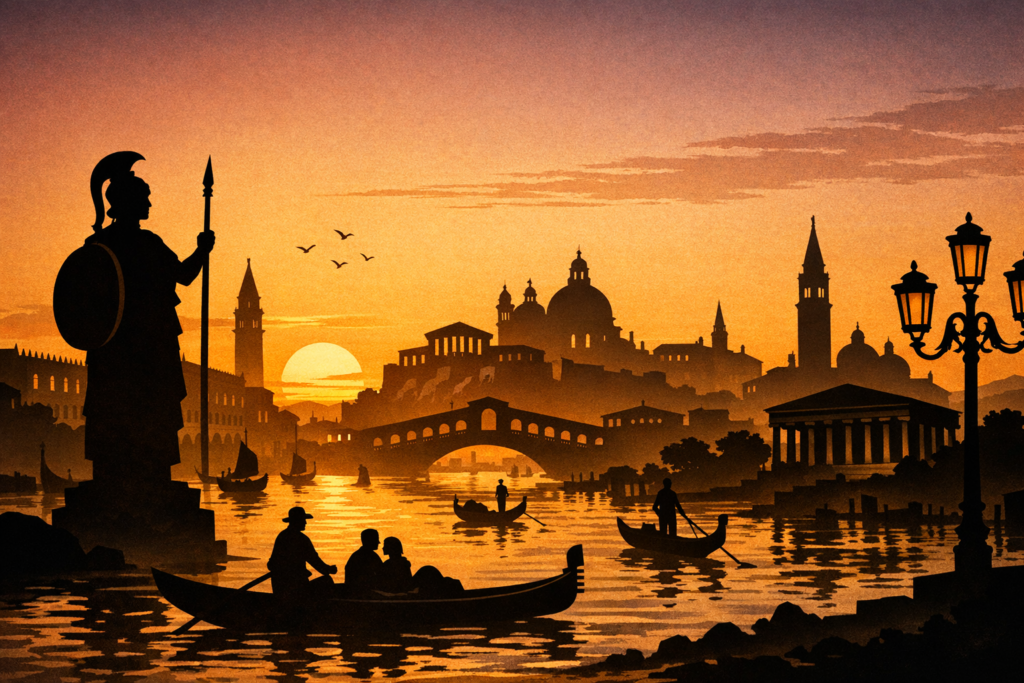
Genoa (1099–1797) cycled between republican governance and domination by strongmen or powerful families. Each shift followed the same logic: crisis → consolidation → control.
Across these city‑states, the pattern remained consistent:
institutions weakened, power centralized, and republics transformed into something else.
The Modern Echo: Strongmen in the Age of Revolutions and Ideologies
The pattern that once toppled ancient republics did not disappear with the passing of empires. It resurfaced in the modern world—now amplified by mass communication, ideology, and industrial power. The names change, the centuries change, but the structure of the takeover remains eerily familiar.
Napoleon Bonaparte (1799–1815) France’s revolutionary republic did not fall in a single night. It fell to a rising military hero who promised stability after years of chaos. Napoleon framed his consolidation of power as a temporary necessity, a corrective to disorder. Through legal reforms, plebiscites, and the language of national salvation, he centralized authority until the republic quietly transformed into an empire. His ascent mirrors the Roman pattern: a republic undone not by invasion, but by the elevation of a “savior” who claimed to protect it.
Joseph Stalin (1920s–1953) Stalin’s rise inside the Soviet system was not a dramatic overthrow but a methodical capture of institutions. He gained control of party appointments, sidelined rivals through administrative maneuvers, and then used fear, purges, and surveillance to cement his rule. His consolidation of power shows how a system built on collective governance can be hollowed out from within by someone who understands the machinery of bureaucracy. The ancient pattern—control the institutions, then control the state—played out on an industrial scale.
Adolf Hitler (1933–1945) Germany’s Weimar Republic collapsed through a sequence of steps that historians now recognize as a classic slow coup. Hitler rose by exploiting economic crisis, political fragmentation, and public fear. Once appointed chancellor, he used emergency decrees, propaganda, and the dismantling of institutional checks to consolidate power. The Enabling Act—passed under the pretext of national emergency—shifted authority from parliament to the executive, echoing the ancient tactic of turning temporary powers into permanent ones. The pattern was not new; it was simply executed with modern tools.
The parallel is striking: a leader asserting that temporary emergency powers need not expire. The pattern is not confined to antiquity. Even in our modern republic, the tension between temporary emergency authority and long‑term executive power continues to surface. Under the War Powers Resolution of 1973, “within sixty calendar days… the President shall terminate any use of United States Armed Forces unless Congress authorizes it.” The sixty‑day mark has now passed since the administration announced military action in Iran, and the President has formally informed Congress that he does not consider the War Powers Resolution applicable to his actions. This position effectively asserts that the statutory limit does not constrain the executive branch. Many people now believe that the primary purpose of starting a war with Iran was to distract the masses from the Epstein files. “Look at the shiny! See the fireworks over Iran? Forget about Jeffrey Epstein,” seems to be the new stay out of jail strategy. It is more like a failed, cheesy, Sith mind trick.
Pol Pot (1975–1979) In Cambodia, the pattern took its most extreme and catastrophic form. Pol Pot rose by exploiting national trauma and ideological fervor, promising purification and rebirth. Once in power, he dismantled institutions entirely, replacing them with absolute party control. The result was a society stripped of its safeguards, governed by fear and enforced loyalty. The collapse was not sudden; it was the culmination of a narrative that framed radical authority as the only path to survival.
Across these modern examples, the same structure emerges: crisis → a figure who promises restoration → emergency powers → erosion of institutions → concentration of authority. The tools evolve, but the logic remains unchanged.
Why the Pattern Keeps Returning
The persistence of this pattern across civilizations suggests something deeper than political coincidence. It speaks to human psychology and the structural vulnerabilities of shared governance.
- Crisis creates openings.
Fear makes extraordinary measures seem reasonable. - Strong leadership becomes seductive.
People gravitate toward figures who promise clarity in uncertain times. - Institutions are fragile.
They depend on norms—unwritten rules that can erode quietly. - Polarization blinds societies.
When citizens see each other as enemies, they become willing to sacrifice process for victory. - Power centralizes naturally.
It takes constant effort to distribute authority, but very little to accumulate it.
These forces are not tied to any one era. They are woven into the human condition.
The Present Moment: Recognizing the Pattern
The ancient pattern is always waiting for an opportunity. Whenever institutions are attacked, whenever loyalty is demanded over law, whenever a crisis is used to justify extraordinary authority, the pattern stirs.
The point is not to accuse.
The point is to recognize.
Democracies do not collapse in a single moment.
They unravel slowly, thread by thread, as the ancient tactics of power reassert themselves in new forms.

The main reason I wrote this exposé is to address the question: What might an American coup d’état look like? And explore if the average citizen would be able to recognize it happening, even if it were racing towards us like a locomotive? I also want to enable the reader to recognize an American Coup d’état if it were in progress. History is quite edifying, and should be used to inform our present, as well as to help plan our future(s).
Closing Reflection: Every Age Faces the Same Test
The story of democracy is not a straight line of progress. It is a cycle of creation, erosion, collapse, and renewal. The world’s first democracies fell not because they were flawed experiments, but because they underestimated the endurance of the ancient pattern.
The pattern is older than Athens, older than Rome, older than empire itself.
It is the gravitational pull of power—always downward, always toward the center.
Every generation must decide whether to resist that pull or surrender to it. We have in the U.S. Constitution and the Bill of Rights a solution.
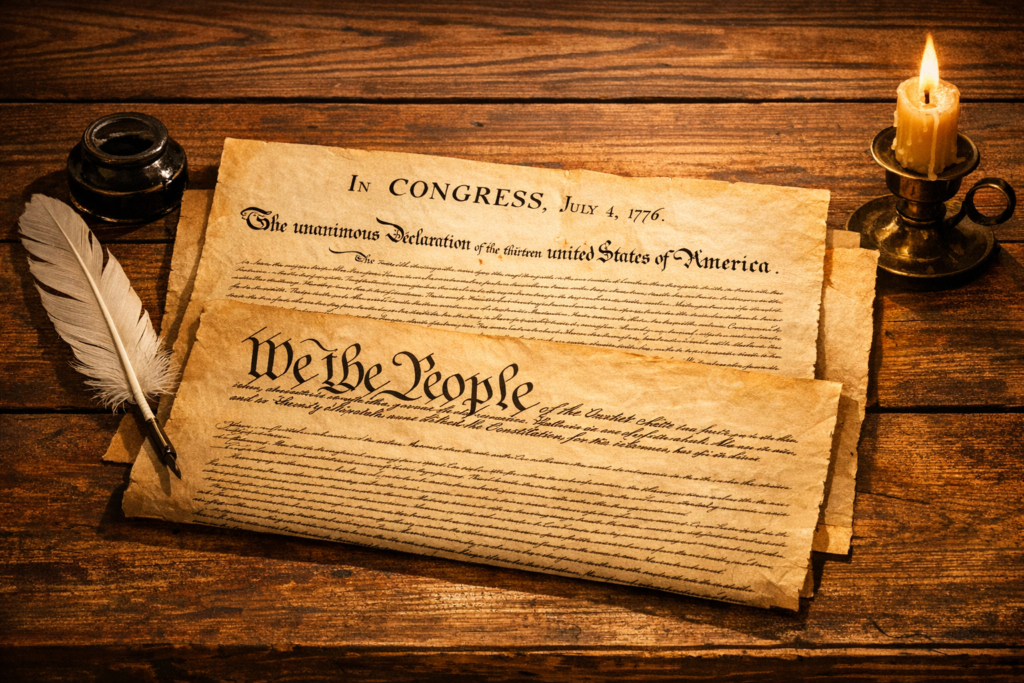
We, the People, need to stand by them and support them. 1.34 million American soldiers have given their lives to protect the spirit and the letter of these foundational documents! Of course, the only real and true solution to all these problems plaguing the world today is in the blueprint for universal peace given to us by the Prince of Peace, Baha’u’llah (1863).
When our forefathers ended the Constitutional Convention in 1787, a woman—traditionally identified as Mrs. Elizabeth Powel of Philadelphia—asked Benjamin Franklin as he left Independence Hall:
“Well, Doctor, what have we got—a republic or a monarchy?” Franklin replied: “A republic, if you can keep it.”
The test is not new. The outcome is not predetermined.
The unraveling of a democracy is not fate. It is a slow choice—made over time by people who forget how ancient the pattern truly is, and who, in their complacency, watch it unfold without so much as a whisper of protest. Freedom dies not with a bang, but with a whimper.
Published on CloseOfTheAge.com — May 2, 2026. © Robert Wright, 2025–present. All rights reserved. You saw it here first.