
This post explores the Bahá’í understanding of Amit-Abha—the Fifth Buddha prophesied in Buddhist tradition.
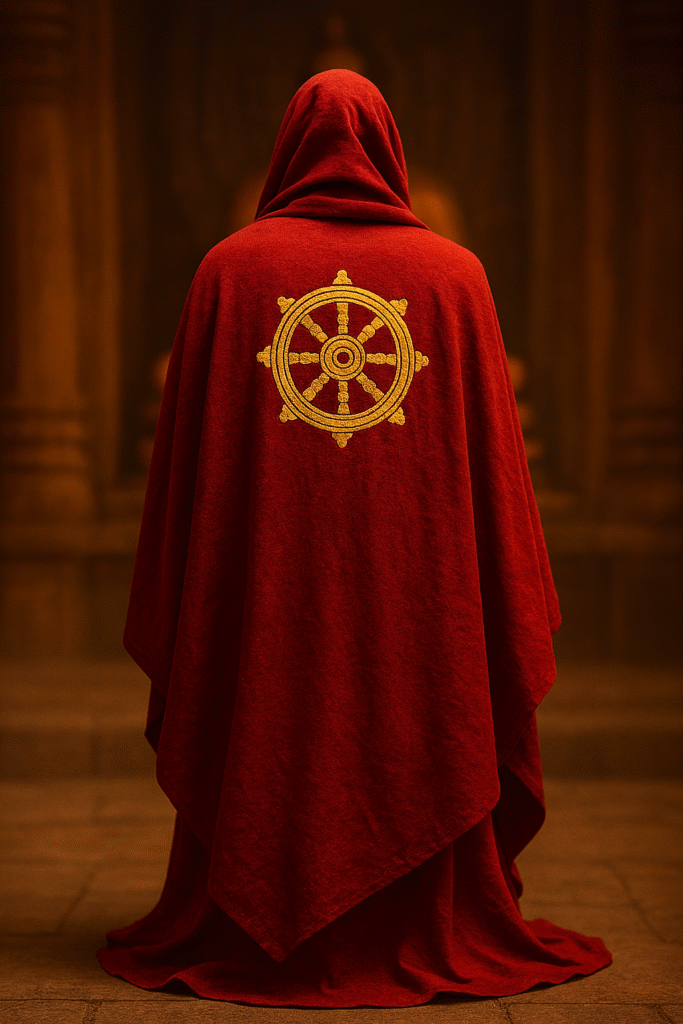
The Baha’i understanding is that the prophesied Amit Abha (Infinite Glory) is Baha’u’llah, as He wore the red robe, and as He is the 5th Manifestation of God after Gautama (Sanskrit; Pali: Gotama), Siddhartha (Sanskrit; Pali: Siddhattha). “Amit” means “Infinite” and “Abha” means “Light” or “Glory.” Baha’u’llah’s Revelation comes directly from God (Amita, the Infinite, Absolute One), as it did for Jesus and Moses and Mohammed and Zoroaster and Krishna and Buddha and Adam, and the Bab. Baha’u’llah reveals that Abha is also part of God’s name. And to Baha’is, Abha represents Heaven. The words “Baha” and “Abha” are interchangeable from east to west in languages from around the world. Both are words created in Divine proportion. “Abha” is also part of the Baha’i greeting that every Baha’i uses. With certitude, I affirm that Baha’u’llah is Amit-Abha—the prophesied Fifth Buddha, the Manifestation of Infinite Glory.
I’d like to share with you what the Establisher of the Baha’i Faith, Dr. Leland Jensen, (who himself fulfills the prophesies for the appearance of the Maitreya Buddha), infallibly wrote about this matter:
Buddha
In the Buddhist faith, Baha’u’llah comes as the fifth Buddha and His establisher as the Maitreya. Baha’u’llah is foretold as the fifth Buddha called Amitabha. He is the fifth because he is the fifth Manifestation after Buddha: 1) Buddha, 2) Jesus Christ, 3) Muhammad, 4) the Bab, and 5) Baha’u’llah. Arabic has its roots in Sanskrit, and “Baha” and “Abha” mean the same thing in these languages: “splendor, light and glory.” The word Amitabha means “infinite light” in Sanskrit. Baha’u’llah is described this way:
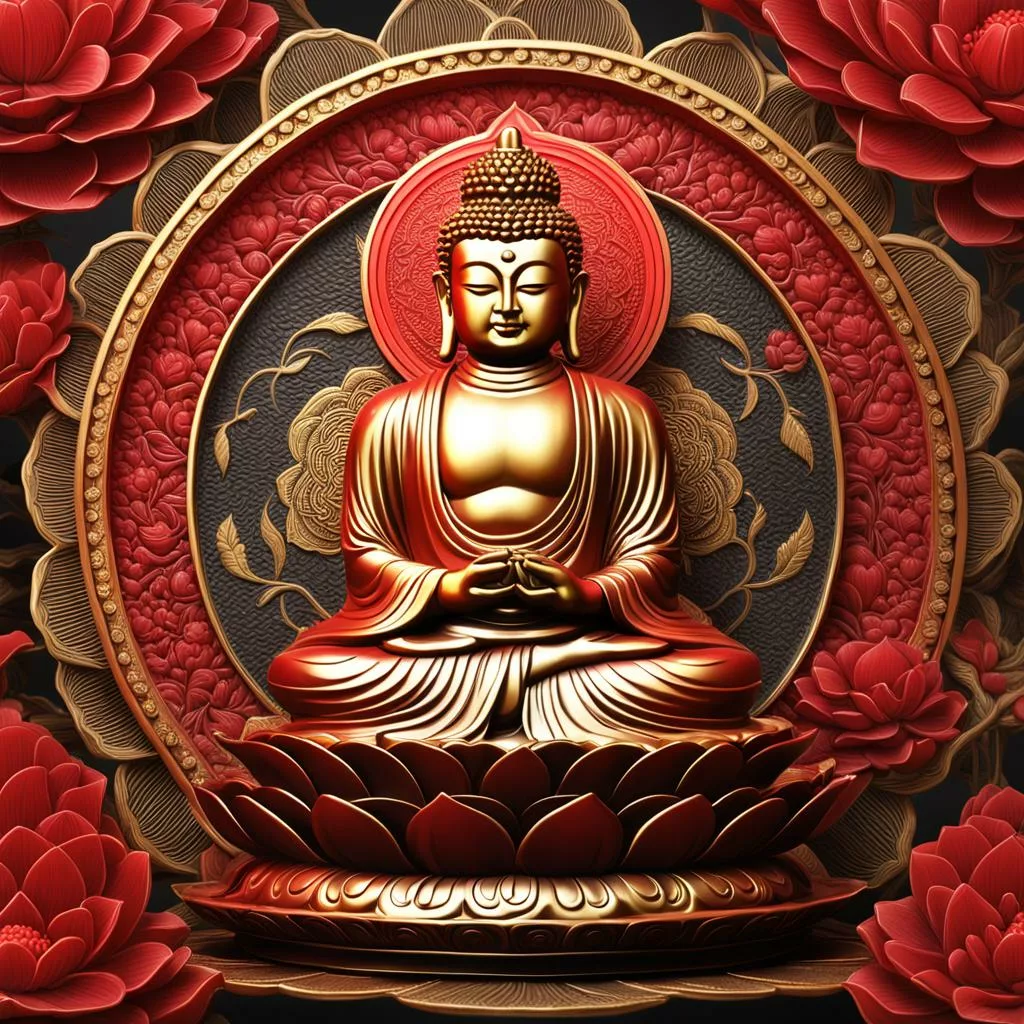
Amitabha is particularly important, not as a savior figure, but as one of the five primordial, self-born Dhyani Buddhas [Manifestations]… his color is red,… [and] his sacred symbol [is] ba or ah…
-M. Levering, ‘Amida’ from Abingdon Dictionary of Living Religions (Abingdon: 1981) ed. Keith Crim, p. 27
Amitabha/Baha’u’llah is “self-born,” meaning a completely independent Manifestation. Baha’u’llah wears the red robe, which is the name of His Revelation and the color of an actual robe made for Him by His wife and daughter in Baghdad. The fifth Buddha, Amitabha, is the Manifestation Who comes at the end time, but it is the Maitreya who establishes the message of Amitabha after Him.
Dr. Leland Jensen – Entry By Troops, (1994)
Comments
Okay, I’ll humour you. Let’s assume that the Pure Land sutras are to be taken as prophecy. Then we need to be able to identify Baha’u’llah as Amitabha via his name, the time in which he appears, his address and his mission, right?
Postulate one: “Baha’u’llah fulfils prophecy by his prophesied name”
This we can agree on. The name Baha’u’llah is quite similar to Amitabha (though not identical).
Postulate two: “Baha’u’llah fulfils his prophesied date, the time in which he was to appear”
In the larger Sukhavatiyuha sutra the Buddha says to Ananda:
“Not indeed, O Ananda, has that Tathagata passed away, nor has he not yet come, but the Tathagata, the holy, after having obtained the highest perfect knowledge, dwells now, remains, supports himself, and teaches the Dharma…”
And in the Smaller Sukhavativyuha sutra he says to Shariputra:
“Moreover, Shariputra, the lifespan of that Buddha and that of his people extends for measureless, limitless asamkhyeyas of kalpas. For this reason he is called Amitayus. And, Shariputra, since Amitabha became a Buddha, ten kalpas have passed.”
So in this regard we cannot agree.
Postulate three: “Baha’u’llah fulfils his prophesied address, or the place he was to come”
The Smaller Sukhavativyuha sutra states:
“At that time, the Buddha told the Elder Shariputra, From here, passing through hundreds of thousands of millions of Buddhalands to the West there is a world called Utmost Happiness.”
Sukhavati is in the western quarter, that’s true, but quite distant from this world. So in this regard we cannot agree either.
Postulate four: “Baha’u’llah fulfils his prophesied profession or mission”
Amitabha was the monk Dharmakara before he became a Buddha. In the larger Sukhavatiyuha sutra he says the following to his teacher, Lokesvararaja:
“May the Bhagavat thus listen to me, to what my own prayers are, and how, after I shall have obtained the highest perfect knowledge, my own Buddha country will then be endowed with all inconceivable excellences and good qualities.”
His mission was to create a Buddha country not an earthly kingdom. So in this regard we cannot agree either.
So all you have is the name, and that seems to be enough for you, but I very much doubt that it will be enough for any Buddhist.
Rasmus, briefly, I would reply, it is to be expected that people, even the masses of Buddhists and Earthlings, will not accept Baha’u’llah. In rejecting the Promised Ones, these people make manifest the verse of Abd’ul-Baha:
“There are souls who, no matter how many proofs are adduced, will still not judge with fairness, for they are veiled by self and passion.”
It’s no skin off my nose what others choose to accept, reject, investigate, or not. Opposing the truth does not make it false.